


 English
  中文简体
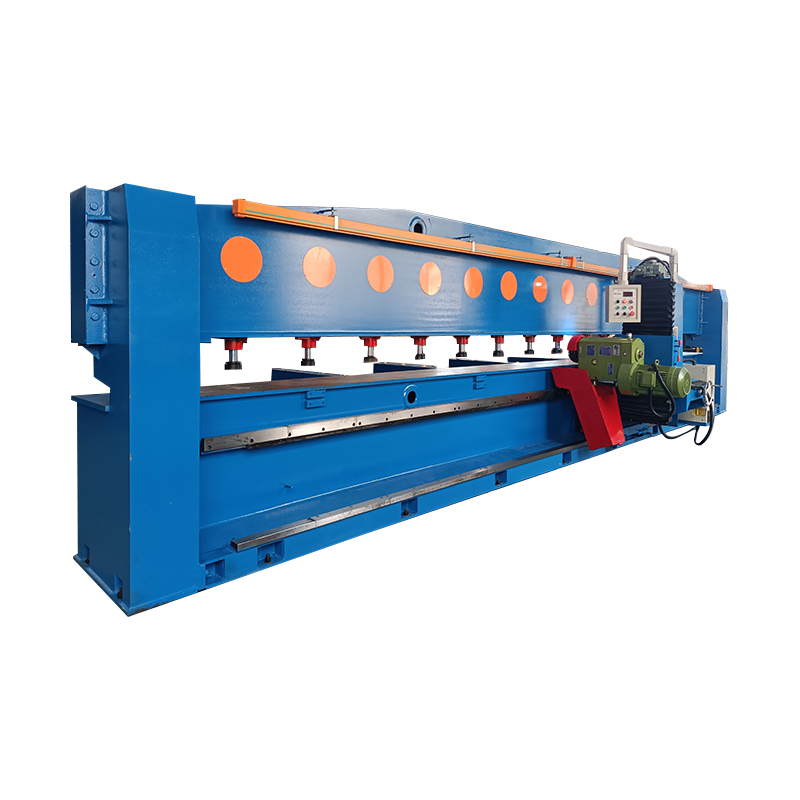
中文简体 Edge Milling Machines & End Milling Machines are highly efficient equipment designed for edge mi...
Woodworking, Paper Cutting, Industrial Knife Grinding Machine Manufacturer
-
-
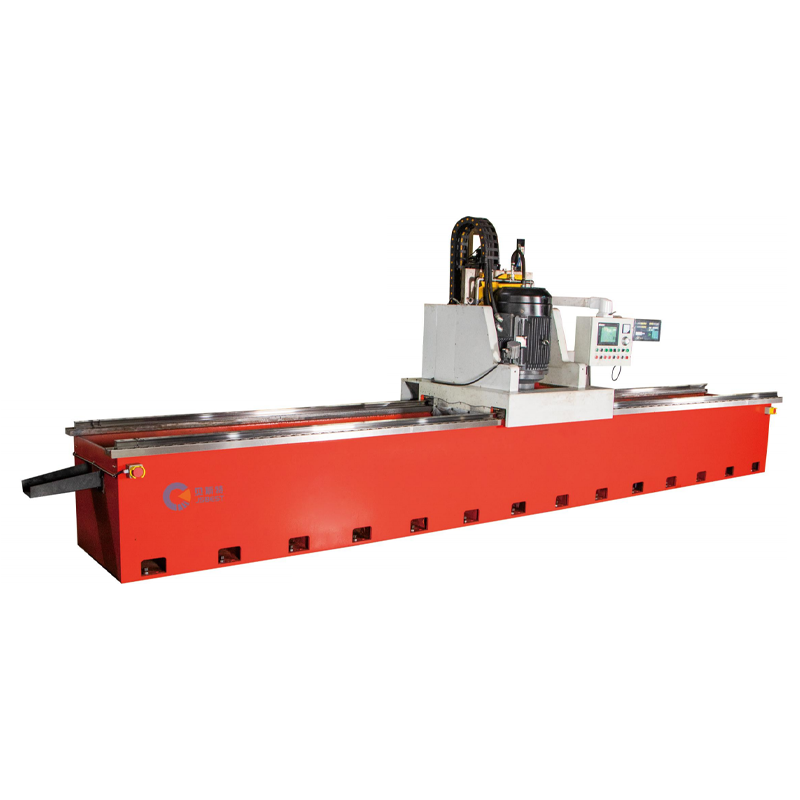 MDD-FD Heavy Linear Guide Plane Grinder
It is suitable for grinding various kinds of dies, straight guide rails, high straightness and high ...
Certificate
Best always adheres to rigorous, scientific, innovative, and sincere principles. It strictly controls every quality detail and strives to ensure that every product is of high quality. The company has obtained ISO9001 quality system certification, CE certification, and product export licenses, and it has the right to engage in the import and export business.
ABOUT US
35 Years of Knife Sharpening Machine Manufacturing
Jiangsu Best CNC Machinery Co., Ltd., with a 35-year history of manufacturing sharpening machines, we are Woodworking, Paper Cutting Knife Grinding Machine Manufacturer and Industrial Blade Grinding Machine Supplier, specializes in producing sharpening machines for various industries such as tool machinery, papermaking, printing, woodworking, textiles, fibers, food, forestry, and plastics. It is the largest professional sharpening machine production base in China and is responsible for drafting national standards for sharpening machines. The company has a professional and efficient team, an engineering and technical research center, and strong capabilities in research and development, processing, testing, assembly, and equipment installation and commissioning. The company always adheres to rigorous, scientific, innovative, and sincere principles. It strictly controls every quality detail and strives to ensure that every product is of high quality. The company has obtained ISO9001 quality system certification, CE certification, and product export licenses, and it has the right to engage in the import and export business. The company always adheres to market demand-oriented and customer-centric principles. It produces various large and medium-sized precision grinding machines, such as MDD-K CNC knife sharpening machines, MYD-K CNC circular knife sharpening machines, and MDD-F heavy-duty grinders, and Industrial Blade Grinding Machine, with basic accuracies up to 0.02mm. Especially, the company's latest developed MDD-G ultra-precision grinder can achieve an accuracy of ±0.005mm/m. All products have independent intellectual property rights. The company has obtained a total of 10 authorized national patents, including 2 invention patents, and many technological projects have filled domestic gaps. Over the years, the company has been recognized as a "National High-Tech Enterprise" and a "Specialized, Refined, Unique, and New Enterprise" in Jiangsu Province. "Quality foremost, reputation first, management-oriented, and service top-notch" is our tenet. With superb product quality and enthusiastic after-sales service, we rely on the enthusiastic support and careful guidance of esteemed customers at home and abroad to promote the continuous and healthy development of our company.
Message Feedback
Recent News
Learn about our industry exhibition information and recent events in our company.
-
A Rewinding Knife Grinding Machine operates on the principle of controlled abrasive material removal: a rotating grinding wheel is brought into precise, repeatable contact with the cutting edge of a circular slitter k...26
-
A Rewinding Knife Grinding Machine is specifically designed to sharpen, profile, and restore the cutting edges of circular (rotary) slitter knives used in rewinding and slitting lines. Its core application is precisio...19
-
The basic process for using a straight knife grinding machine follows a structured sequence: machine preparation and inspection, blade mounting and fixture setup, grinding parameter configuration, the grinding pass itse...12
-
A circular knife grinding machine is used to restore, sharpen, and maintain the cutting edges and flat surfaces of circular (disc) blades used across a wide range of industrial cutting and slitting operations. Its core ...05
Product Industry knowledge
1. Key Differences in Parameter Settings for Woodworking Knife Grinding Machine vs. Rewinding Knife Grinding Machine
Woodworking knives (e.g., planer knives, circular saw blades) differ significantly from rewinding knives in material and application scenarios, requiring targeted parameter adjustments:
Material & Grinding Wheel Matching :
Woodworking knives are mostly made of high-speed steel (HRC 56-60) or alloy steel (HRC 58-62), which have good toughness but are prone to wood chip adhesion. Thus, aluminum oxide grinding wheels (grain size 60-100 mesh) are more suitable—they have strong chip removal ability and avoid clogging caused by wood residues. In contrast, rewinding knives often use diamond or CBN wheels for hard materials like cemented carbide.
For carbide-tipped woodworking knives (e.g., router bits), fine-grain diamond wheels (150-200 mesh) should be used to prevent the carbide tip from chipping, with a grinding speed of 1800-2200 r/min (lower than that of rewinding knives to avoid tip overheating).
Pressure & Feed Rate Control :
Woodworking knives have a larger cutting edge angle (usually 25°-35°, compared to 15°-45° for rewinding knives). The grinding pressure should be controlled at 0.3-0.6 MPa —excessive pressure will deform the edge and affect wood planing smoothness. The feed rate is 0.02-0.03 mm/pass, slightly higher than that of rewinding knives for efficient removal of wood resin residues.
Rewinding knives, especially ceramic ones, require lower pressure (0.3-0.5 MPa) but higher precision in feed rate (0.01 mm/pass) to ensure cutting flatness for films or papers.
Cooling Requirements :
Woodworking knife grinding machine generates less heat but more debris; thus, compressed air cooling is often used (instead of emulsion) to avoid wood fibers mixing with coolant and clogging the grinding area. For rewinding knives, emulsion cooling (concentration 8%-10%) is essential to prevent high-temperature microcracks on hard materials.
2. Practical Maintenance Tips for Paper Cutting Knife Grinding Machine
Paper cutting knives (used in printing, packaging industries for cutting large-format paper) have a long, flat blade edge and high requirements for straightness, so their maintenance focuses on precision preservation:
Daily Inspection Focus :
Blade Clamping System : The paper cutting knife’s clamping fixture is prone to wear due to long-term contact with the flat blade. Check the fixture’s pressure plate for deformation daily—if the blade shifts during grinding, use a feeler gauge to adjust the fixture gap (should be ≤ 0.005 mm) to ensure the blade is clamped evenly.
Grinding Wheel Straightness : Unlike rewinding knives that allow slight arc grinding, paper cutting knives require absolute straightness (error ≤ 0.01 mm/m). Use a straightedge to check the grinding wheel’s working surface weekly; if there is a concave or convex deviation, trim the wheel with a diamond dresser until straight.
Periodic Maintenance (Every 2 Months) :
Linear Guide Rail Calibration : The paper cutting knife grinding machine’s guide rail bears a long blade (often 1.5-3 m), so rail parallelism is critical. Use a laser interferometer to test rail parallelism—if the deviation exceeds 0.02 mm/m, adjust the rail’s positioning bolts to restore precision, preventing uneven grinding on the blade’s two ends.
Coolant Filtration Upgrade : Paper fibers may enter the coolant during grinding, causing nozzle blockage. Replace the coolant filter element every 2 months and add a magnetic separator to the coolant tank to adsorb metal debris, ensuring uniform coolant spray (especially important for the long blade of paper cutting knives).
3. Application Scope & Model Selection of Industrial Blade Grinding Machine
Industrial Blade Grinding Machine is a general term covering rewinding, woodworking, paper cutting, and other blade types. Its selection should be based on "blade category + processing volume + precision requirements":
Application Scope Classification :
Light-duty Industrial Blade Grinding Machine (load-bearing ≤ 50 kg): Suitable for small blades like woodworking planer knives (length ≤ 1 m) and small paper cutting knives (length ≤ 0.8 m). It has a compact structure (occupancy ≤ 2 m²) and is suitable for small workshops or maintenance workshops.
Medium-duty Industrial Blade Grinding Machine (load-bearing 50-200 kg): For medium-sized blades such as rewinding knives (length 0.5-2 m) and paper cutting knives (length 1-2 m). It is equipped with semi-automatic feeding and basic precision compensation, meeting the daily needs of medium-sized enterprises (e.g., packaging factories, small paper mills).
Heavy-duty Industrial Blade Grinding Machine (load-bearing ≥ 200 kg): Used for large blades like wide rewinding knives (2-5 m) and large-format paper cutting knives (3-4 m). It has a reinforced workbench, dual-drive motors, and laser precision detection, suitable for large-scale industrial production (e.g., large paper mills, film manufacturing plants).
Key Selection Indicators :
Grinding Precision Adaptability : For woodworking and paper cutting knives, focus on "edge straightness" (error ≤ 0.01 mm/m); for rewinding knives, prioritize "edge flatness" (error ≤ 0.005 mm/m). Choose machines with replaceable grinding heads to adapt to different blade types (e.g., changing from flat grinding head for paper cutting knives to arc grinding head for rewinding knives).
Automation Level : Small enterprises can choose manual feeding machines (cost-saving); medium and large enterprises should select automatic models with "blade size detection + parameter automatic matching" (e.g., the machine automatically adjusts grinding speed and pressure after inputting blade length and material), reducing labor errors and improving efficiency.
4. How to Switch Between Different Blade Types on a Multi-functional Industrial Blade Grinding Machine
Many enterprises use multi-functional Industrial Blade Grinding Machines to process rewinding, woodworking, and paper cutting knives. The switching process requires 4 key steps to ensure precision:
Grinding Head Replacement : Replace the grinding wheel according to the blade type—aluminum oxide wheel for woodworking knives, diamond wheel for rewinding knives, and straight-grain diamond wheel for paper cutting knives. After replacement, calibrate the wheel’s runout (error ≤ 0.02 mm) with a dial indicator.
Fixture Adjustment : Change the clamping fixture—use V-shaped fixtures for circular woodworking saw blades, flat pressure fixtures for paper cutting knives, and segmented fixtures for long rewinding knives. Adjust the fixture’s clamping force (0.4-0.8 MPa for woodworking knives, 0.6-1.0 MPa for rewinding knives) to avoid blade deformation.
Parameter Reset : Call the preset parameter library (or input new parameters) on the machine’s control panel—e.g., set speed to 1800 r/min, pressure to 0.5 MPa for woodworking knives; speed to 2500 r/min, pressure to 1.0 MPa for rewinding knives; speed to 2000 r/min, pressure to 0.7 MPa for paper cutting knives.
Test Grinding Verification : Take a spare blade of the target type for test grinding (5-10 minutes), check edge precision (straightness for paper cutting knives, flatness for rewinding knives, sharpness for woodworking knives), and adjust parameters slightly if needed before formal batch processing.
5. Supplier Reference for Multi-type Knife Grinding Machines
When selecting suppliers for woodworking, paper cutting, and Industrial Blade Grinding Machines, in addition to the service capabilities mentioned earlier (customization, after-sales, training), focus on "blade type adaptation experience" :
Priority should be given to enterprises with mature solutions for multiple blade types (e.g., Jiangsu Best CNC Machinery Co., Ltd.), which can provide one-stop services such as "multi-functional machine customization + cross-type blade grinding training"—for example, modifying a standard Industrial Blade Grinding Machine to add a woodworking knife clamping module, or providing training on switching between rewinding and paper cutting knife grinding, helping enterprises reduce equipment investment and improve utilization efficiency.

- PRODUCT
- MDD Series Straight Knife Grinding Machine
- MYD Series Circular Knife Grinding Machine
- MCD Series Rewinding Knife Grinding Machine
- QUICK LINKS
- About Us
- Manufacturing
- Industry Solutions
- Downloads
- Contact
- CONTACT US
-
-
 No.99, Huanghai South Road, Tangyang Town, Dongtai City, Jiangsu Province, China
 -
 0086-13818631306
 -
 +86-515-85652988
 -

-

