


 English
  中文简体
中文简体 • The CNC Knife Grinding Machine adopts PLC program control, which is easy to operate, fast, stable,...
See DetailsHow Does the MCD Series Rewinding Knife Grinding Machine Enhance Cutting Precision?
Industry News-In industries like packaging, printing, and film production, the precision of rewinding and cutting directly impacts product quality—even a 0.1mm deviation in cut edges can render materials unusable for high-demand applications (e.g., food packaging seals or precision-label printing). The MCD Series Rewinding Knife Grinding Machine is designed to address this need by optimizing the sharpness, uniformity, and alignment of cutting knives, which are the core components of rewinding systems. Below, we break down the key mechanisms and features that allow this machine to elevate cutting precision.
What Makes MCD (Monocrystalline Diamond) the Ideal Material for Knife Grinding in This Series?
The "MCD" in the machine’s name refers to monocrystalline diamond—a material that sets this series apart from standard knife grinders, and its properties are foundational to enhancing cutting precision. Unlike traditional grinding materials (e.g., aluminum oxide or cubic boron nitride), MCD offers unique advantages for knife sharpening:
1. Exceptional Hardness and Wear Resistance
MCD is one of the hardest known materials, with a Mohs hardness rating of 10 (the highest possible). This means it maintains its sharp grinding edge far longer than other abrasives, even when grinding high-hardness cutting knives (e.g., tungsten carbide or high-speed steel blades). For example, an MCD grinding wheel can sharpen 500+ carbide knives before needing replacement, compared to 50–100 for a standard aluminum oxide wheel. Consistent grinding performance eliminates "dulling" mid-process, ensuring every knife receives the same level of sharpening—critical for uniform cutting across batches.
2. Ultra-Fine Surface Finish
MCD’s crystalline structure allows it to grind knife edges with microscopic smoothness. Traditional grinders often leave tiny burrs or irregularities on knife edges (invisible to the naked eye but visible under a microscope), which cause "fraying" or uneven cuts in thin materials like plastic film or paper. The MCD series produces edges with a surface roughness (Ra) of <0.1 μm—so smooth that the knife slices through materials cleanly, without tearing or leaving jagged edges. This is especially vital for transparent films (e.g., PET packaging), where even minor edge defects are visible to consumers.
3. Minimal Heat Generation
Grinding generates friction, which can heat up knives and cause thermal damage (e.g., warping, softening of metal blades, or micro-cracks in the edge). MCD’s low coefficient of friction reduces heat buildup during grinding: tests show that MCD grinding produces 30–50% less heat than standard abrasives. This protects the knife’s structural integrity—warped or damaged knives cannot cut straight, so preserving their shape directly maintains cutting precision.
How Does the Machine’s Precision Grinding Mechanism Ensure Uniform Knife Edges?
Even with high-quality MCD abrasives, precision depends on how the machine controls the grinding process. The MCD Series incorporates three key mechanical designs to ensure every knife edge is consistent in angle, sharpness, and symmetry:
1. Computer-Controlled (CNC) Grinding Paths
The machine uses CNC (Computer Numerical Control) technology to program and execute grinding paths with micron-level accuracy. Operators input parameters like knife angle (e.g., 30° for film-cutting knives, 45° for paper-cutting knives), edge radius (typically 0.01–0.05 mm), and grinding depth—then the CNC system guides the MCD wheel along a pre-set path. This eliminates human error (e.g., uneven pressure or inconsistent angle from manual grinding) and ensures every knife in a batch adheres to the exact same specifications. For example, if 100 knives are sharpened in a single run, the angle variation between the first and last knife is <0.1°—a level of consistency impossible with manual grinders.
2. Adaptive Pressure Control
Different knife materials (e.g., thin steel blades vs. thick carbide blades) require different grinding pressures to avoid damage or under-sharpening. The MCD Series uses load cells (sensors that measure pressure) to adjust grinding force in real time. If the wheel encounters a harder section of the knife (e.g., a carbide inlay), the system automatically reduces pressure to prevent edge chipping; if it grinds a softer steel section, it increases pressure to ensure sufficient sharpening. This adaptive control ensures uniform sharpness across the entire knife edge—no "soft spots" that cause uneven cuts.
3. Dual-Side Synchronous Grinding
Many rewinding knives (e.g., circular slitting knives) have two cutting edges that must be perfectly symmetrical to avoid "side drift" during cutting (where the knife pulls to one side, creating angled edges). The MCD Series features two MCD grinding wheels that work simultaneously on both sides of the knife. A laser alignment system monitors the distance between the two edges in real time, adjusting the wheels to keep symmetry within 0.005 mm. This is critical for slitting wide materials (e.g., 1-meter-wide plastic film) into narrow strips—symmetrical edges ensure each strip has a consistent width, with no variation beyond 0.02 mm.
How Does the Machine’s Knife Clamping and Alignment System Prevent Errors?
Even the most precise grinding wheel cannot produce accurate edges if the knife is misaligned or unstable during sharpening. The MCD Series addresses this with a specialized clamping and alignment system:
1. Vacuum or Magnetic Clamping for Stability
The machine uses either vacuum clamping (for thin, lightweight knives like film slitter blades) or magnetic clamping (for thick, heavy carbide knives) to secure the knife in place. These methods distribute pressure evenly across the knife’s surface, eliminating "wobble" during grinding. For example, vacuum clamping holds a thin steel knife (0.1mm thick) flat with <0.001mm of deflection—ensuring the grinding wheel contacts the edge uniformly, not at an angle.
2. Laser Pre-Alignment Before Grinding
Before grinding begins, a laser profilometer scans the knife’s existing edge to detect any bending, warping, or misalignment. If the knife is slightly curved (a common issue after repeated use), the system adjusts the clamping position to "straighten" the knife virtually—aligning its edge with the grinding path. This step prevents the machine from sharpening a warped knife (which would result in a curved cutting edge, causing uneven cuts) and ensures the final edge is perfectly straight. For example, if a knife has a 0.05mm curve, the alignment system corrects it so the ground edge has a straightness tolerance of <0.003mm.
3. Repeatable Positioning for Batch Processing
For manufacturers that sharpen the same type of knife regularly, the MCD Series stores clamping and alignment parameters in a database. When the same knife model is loaded again, the machine automatically recalls the settings—ensuring consistent positioning across batches. This repeatability is key for long-term quality control: if a customer orders the same film-cutting knives six months apart, the second batch will have identical edge specifications to the first, guaranteeing consistent cutting performance.
How Does Post-Grinding Inspection Integrate to Ensure Precision?
The MCD Series doesn’t stop at grinding—it includes built-in inspection tools to verify that every knife meets precision standards before it leaves the machine:
1. In-Line Optical Measurement
After grinding, a high-resolution camera (500x magnification) captures images of the knife edge, which are analyzed by software to check parameters like angle, edge radius, and surface roughness. The software compares the measurements to the target specifications and flags any knives that fall outside tolerance (e.g., an edge radius of 0.06mm when 0.05mm is required). Operators can then re-grind these knives immediately, reducing waste and ensuring only 合格 (qualified) knives are used in rewinding systems.
2. Cutting Performance Simulation
For critical applications (e.g., medical packaging films that require sterile, burr-free cuts), the machine can perform a miniature cutting test using a sample of the target material (e.g., 10mm-wide PET film). The sharpened knife makes a few cuts, and the sample is inspected under a microscope to check for fraying, burrs, or uneven edges. If the test fails, the machine adjusts grinding parameters (e.g., reducing edge radius) and re-sharpens the knife—ensuring it performs as intended in real-world use.
3. Data Logging for Traceability
Every knife sharpened by the MCD Series has its grinding and inspection data (e.g., date, operator, angle, edge radius, test results) stored in a digital log. This traceability is critical for industries with strict quality standards (e.g., food packaging, where contaminated or poorly cut materials risk product recalls). If a batch of cuts has issues, manufacturers can review the log to identify whether the problem stems from the knife’s grinding parameters—allowing quick adjustments to prevent future errors.
Why Does This Precision Matter for Rewinding Operations?
The MCD Series’ focus on knife precision directly translates to better performance in rewinding systems, with three key benefits:
Reduced Material Waste: Precise, burr-free cuts eliminate "scrap" from uneven edges. For example, a packaging manufacturer using MCD-sharpened knives may reduce waste from 5% to 1%—a significant saving when processing 10,000 meters of film daily.
Faster Rewinding Speeds: Sharp, balanced knives require less force to cut through materials, allowing rewinding machines to run at higher speeds (e.g., 300 meters per minute vs. 200 m/min with dull knives) without sacrificing quality.
Consistent Product Quality: Uniform cuts ensure every finished product (e.g., a snack package, a label roll) meets size and appearance standards—reducing customer complaints and returns.
In summary, the MCD Series Rewinding Knife Grinding Machine enhances cutting precision through a combination of premium MCD abrasives, CNC-controlled grinding, adaptive pressure systems, precise clamping, and post-grinding inspection. By optimizing every step of the knife sharpening process, it ensures that rewinding knives deliver consistent, accurate cuts—critical for industries where precision directly impacts product quality and profitability.
Related products
-
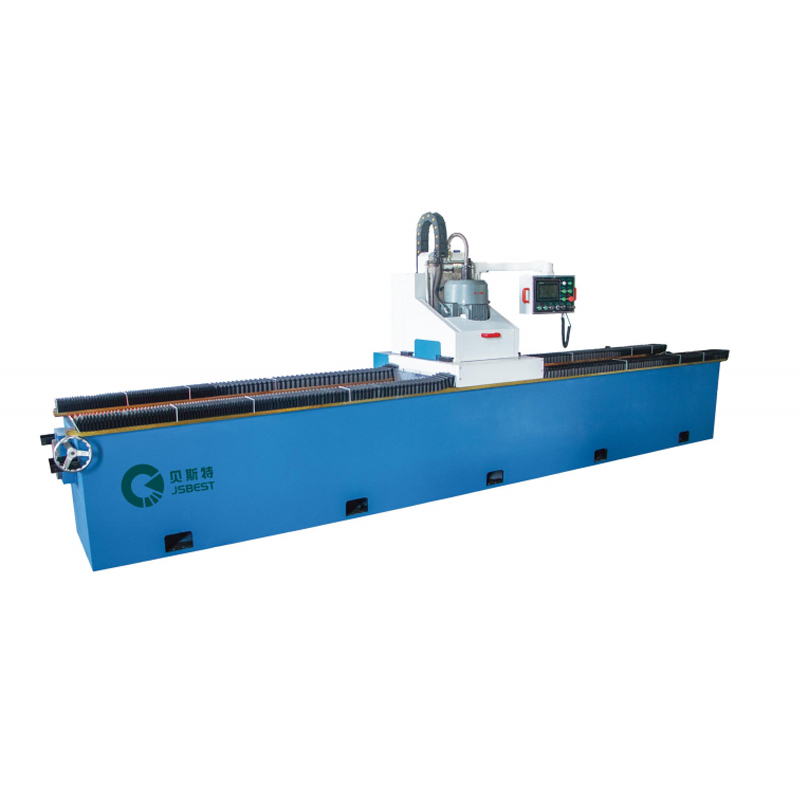
-

• The whole machine adopts a high-strength gantry-type welding structure, with a solid and compact o...
See Details -
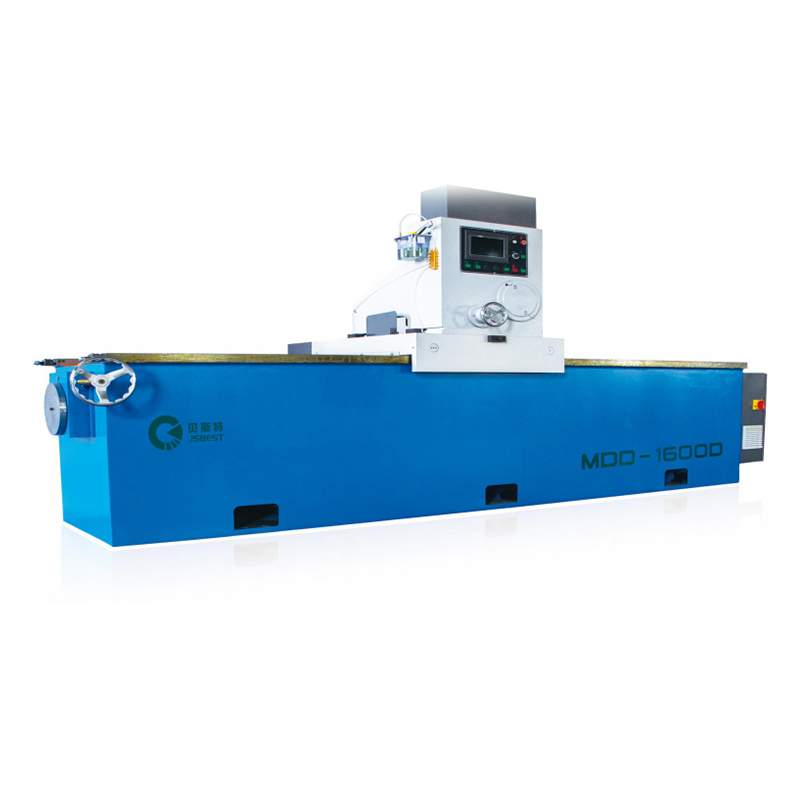
• The grinder adopts a gantry-type bed, high-quality steel plate welding, high-temperature tempering...
See Details -
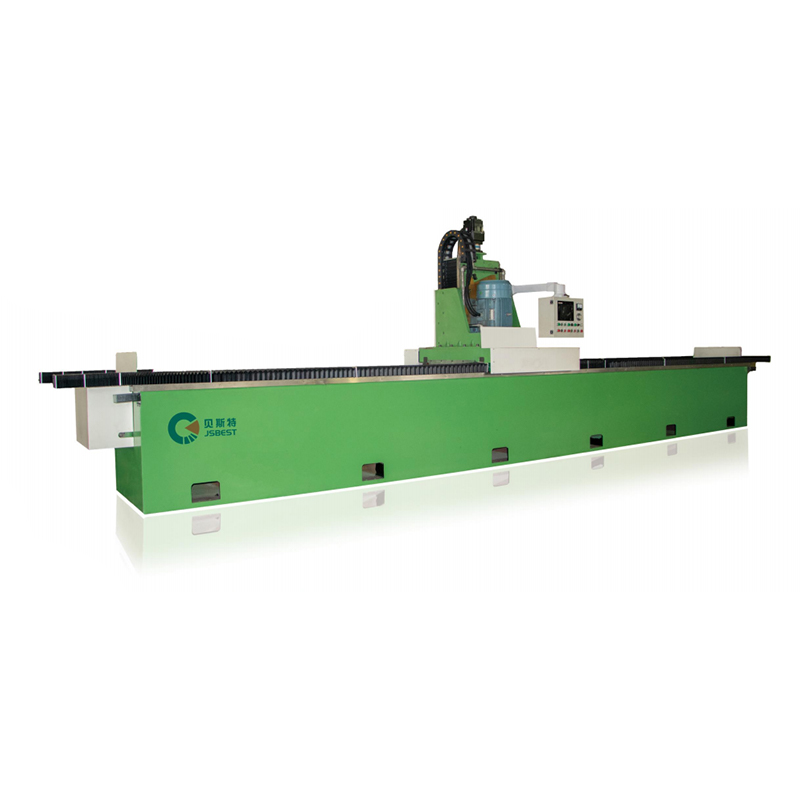
• A high-strength welded steel structure is adopted to eliminate the internal stress of the machine ...
See Details -
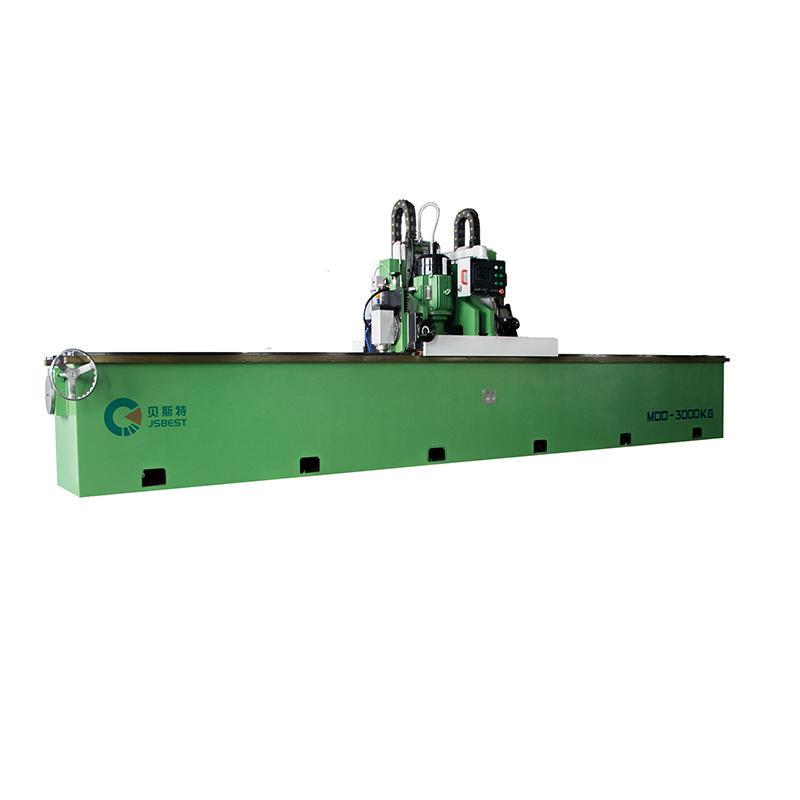
Double-Head Knife Grinding Machine is an efficient grinding equipment that combines rough grinding a...
See Details -
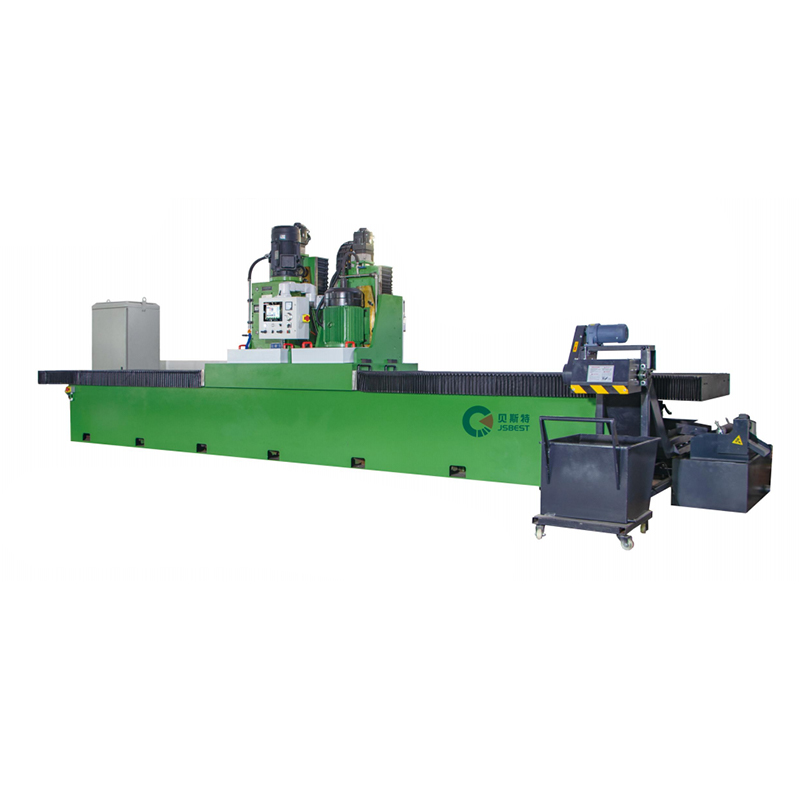
Heavy-Duty Surface Milling And Grinding Machine is an efficient processing equipment that integrates...
See Details -
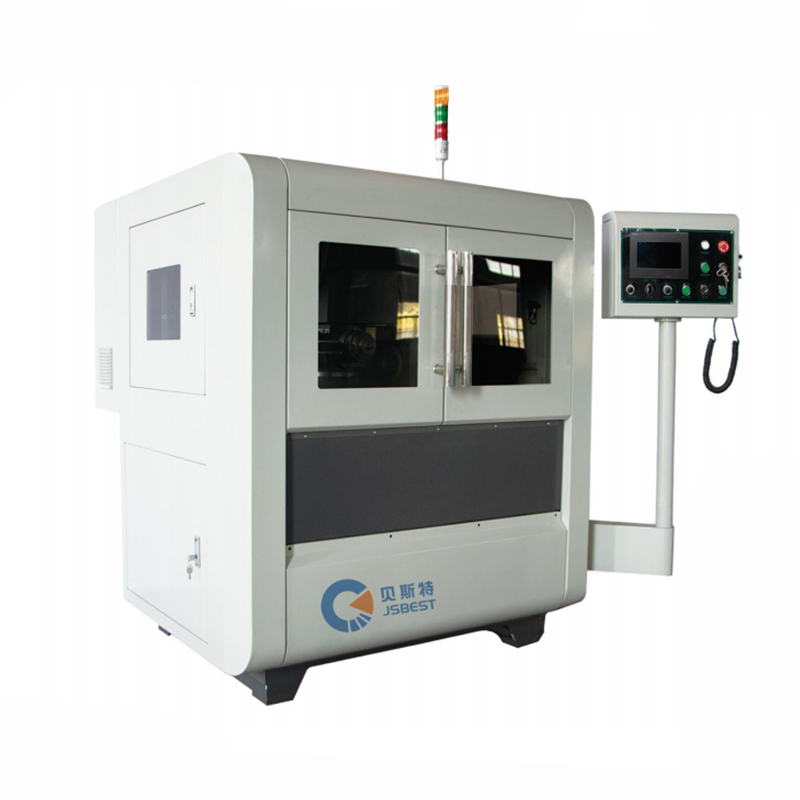
• This round knife grinder adopts a PLC program to control the automatic feeding part, which is easy...
See Details -
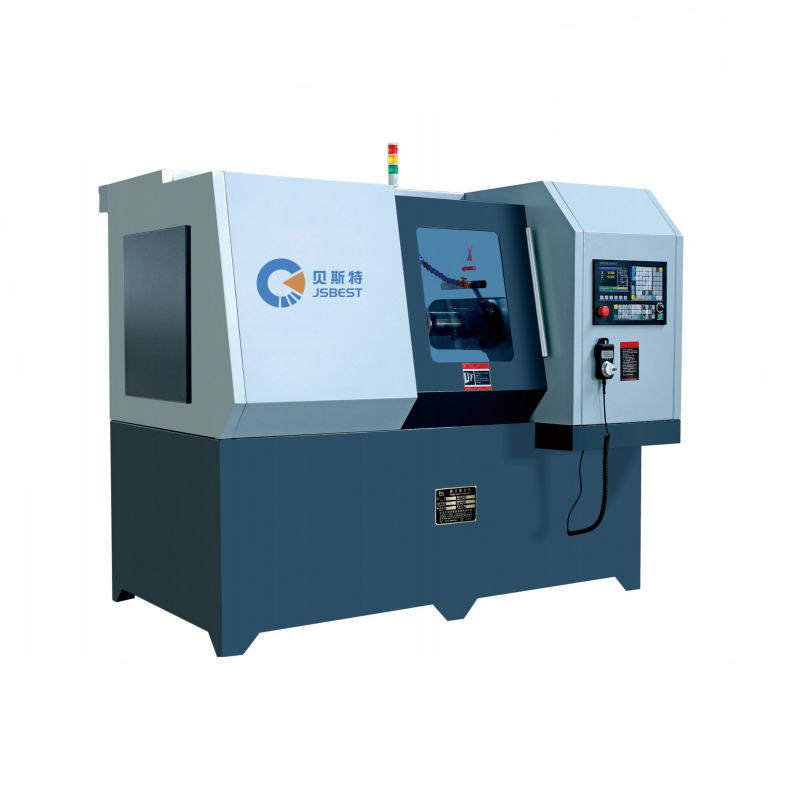
CNC Circular Knife Grinding Machine structural features:• High grinding accuracy, spindle and knife ...
See Details

- PRODUCT
- MDD Series Straight Knife Grinding Machine
- MYD Series Circular Knife Grinding Machine
- MCD Series Rewinding Knife Grinding Machine
- QUICK LINKS
- About Us
- Manufacturing
- Industry Solutions
- Downloads
- Contact
- CONTACT US
-
-
 No.99, Huanghai South Road, Tangyang Town, Dongtai City, Jiangsu Province, China
 -
 0086-13818631306
 -
 +86-515-85652988
 -

-

